The Future of Care
“NICE positions non-pharmacological interventions, including individualised activities and cognitive stimulation, as important elements of dementia care, supporting people living with dementia to feel secure and to live authentically as themselves.”
National Institute of Health and Care Excellence (NICE), UK
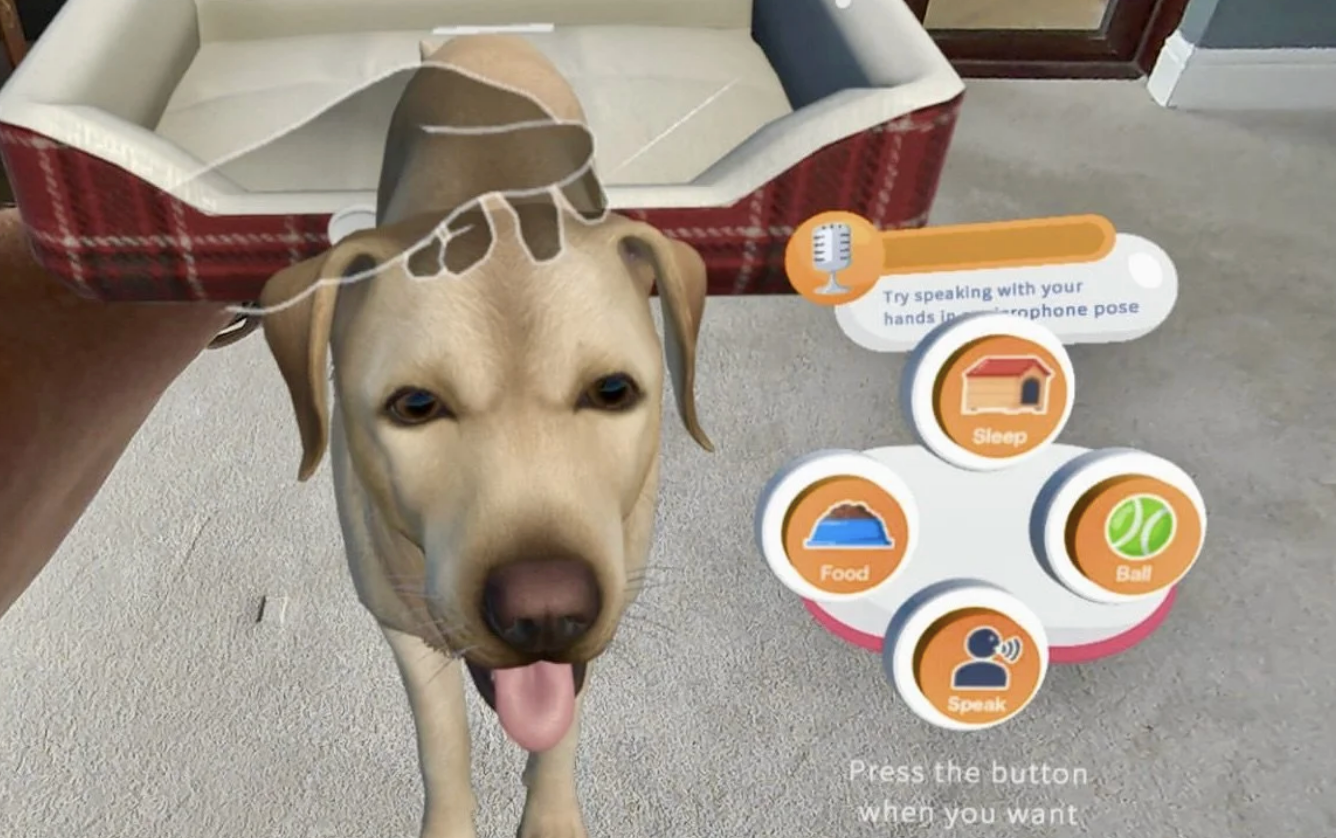
“It goes beyond simple recreation – we feel it has strong potential to meet the needs of people living with dementia.”
Care Home Staff Member
For care homes, the future is always a balance between improving service while ensuring the business remains profitable.
Technology increasingly plays a key role, offering new ways to support residents while reducing the burden on staff. The CQC are actively encouraging the adoption of new technologies.
V-Thera is very much a part of that future, allowing care homes to stand out by offering improved care delivery at an affordable cost.
It is easy to incorporate into daily routines. No training is required, and sessions can be conducted by a single staff member. That leaves more time for individualised support and supervision.
A subscription with V-Thera works out at just a few pounds a day.
Animal Assisted Therapy - Without The Animal
The benefits of Animal-Assisted Therapy (AAT) with live animals are widely documented. They can deliver significant improvements in communication, reminiscence and general well-being, even in adults with dementia.
Unfortunately live animals can be challenging to incorporate into the daily life of a care home due to issues with allergies, hygiene, animal care and temperament, and staffing constraints.
V-Thera digital pets offer the same benefits, but are clean, safe and always ready to interact. Sessions should be limited to 10 minutes, but the only limit to the number of sessions a virtual pet can offer in a day is the battery in the headset.
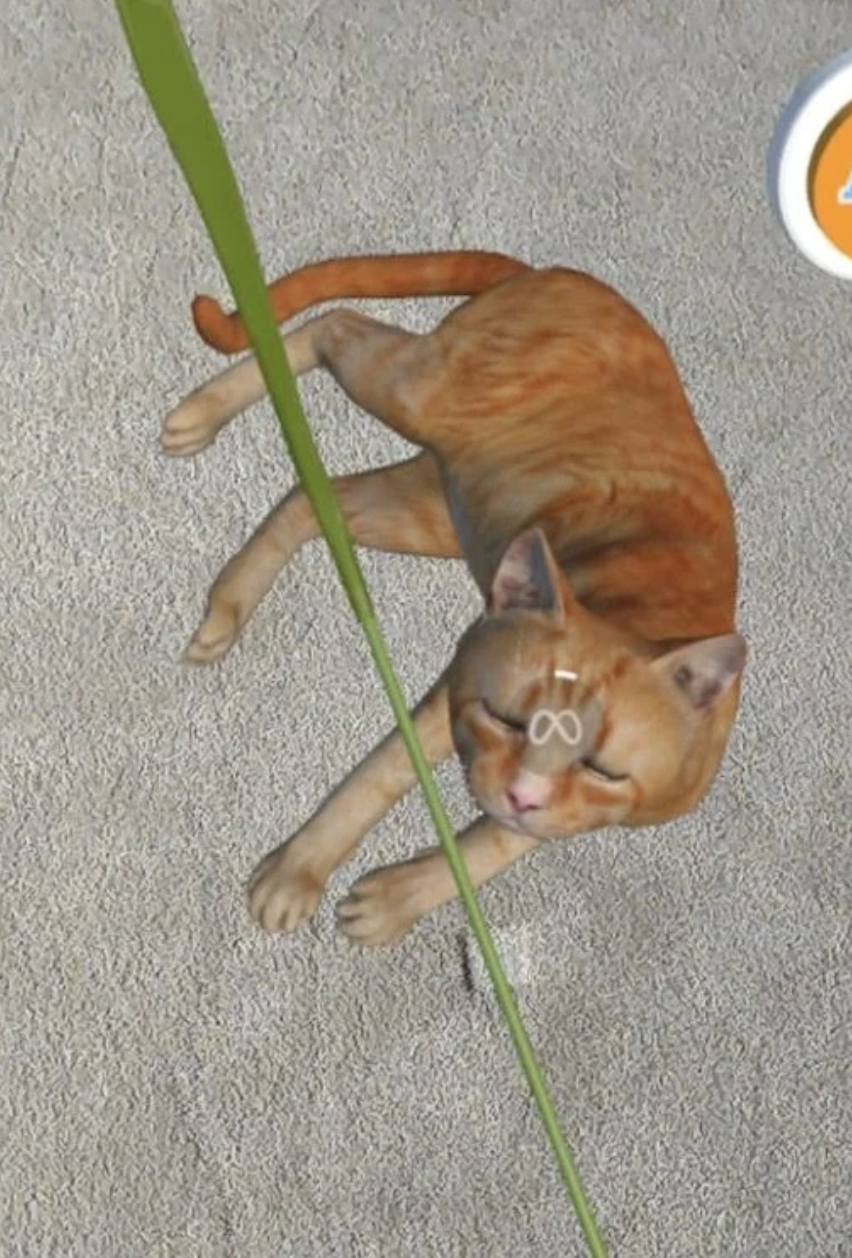
“The system has been well received by users who lived with dogs but were no longer able to keep one due to age or other circumstances.”
Care Home Staff Member
Bringing Care To Life
V-Thera offers great potential as a support for psychological stability and well-being.
Engagement
Because the virtual pet appears in familiar surroundings, users are immediately relaxed. For some, it is enough just to see and pat the dog or cat, while for others, throwing a ball or feeding brings real joy.
Reminiscence
Interaction with V-Thera brings back personal memories of past pets or family members. Reminiscence Therapy is a non-pharmacological approach to dementia care, contributing to compassionate, person-centred care that resonates on an emotional level.
Communication
V-Thera encourages communication as the user talks directly to the virtual pet and shares their emotions with staff and other residents. This fosters improved connections and a general uplift in morale in the home.
Movement
The gentle movements trigger muscle memory, allowing residents to relearn how to push a button, throw a ball or shake a can. V-Thera is designed to adapt to all capabilities and never requires the user to do more than is comfortable for them.
“After the experience, there were moments when users reminisced about dogs they had owned in the past, which often helped spark conversation and expand daily communication.”
Care Home Staff Member
Your V-Thera
What Does It Cost?
A one-year subscription costs just £625,
Or £75 per month for a year if you prefer to spread the cost.
Subscription does not include the headset
“Some users initially showed hesitation, but once they experienced the system we were surprised to see them willingly put on the VR headset on their own.”
Care Home Manager
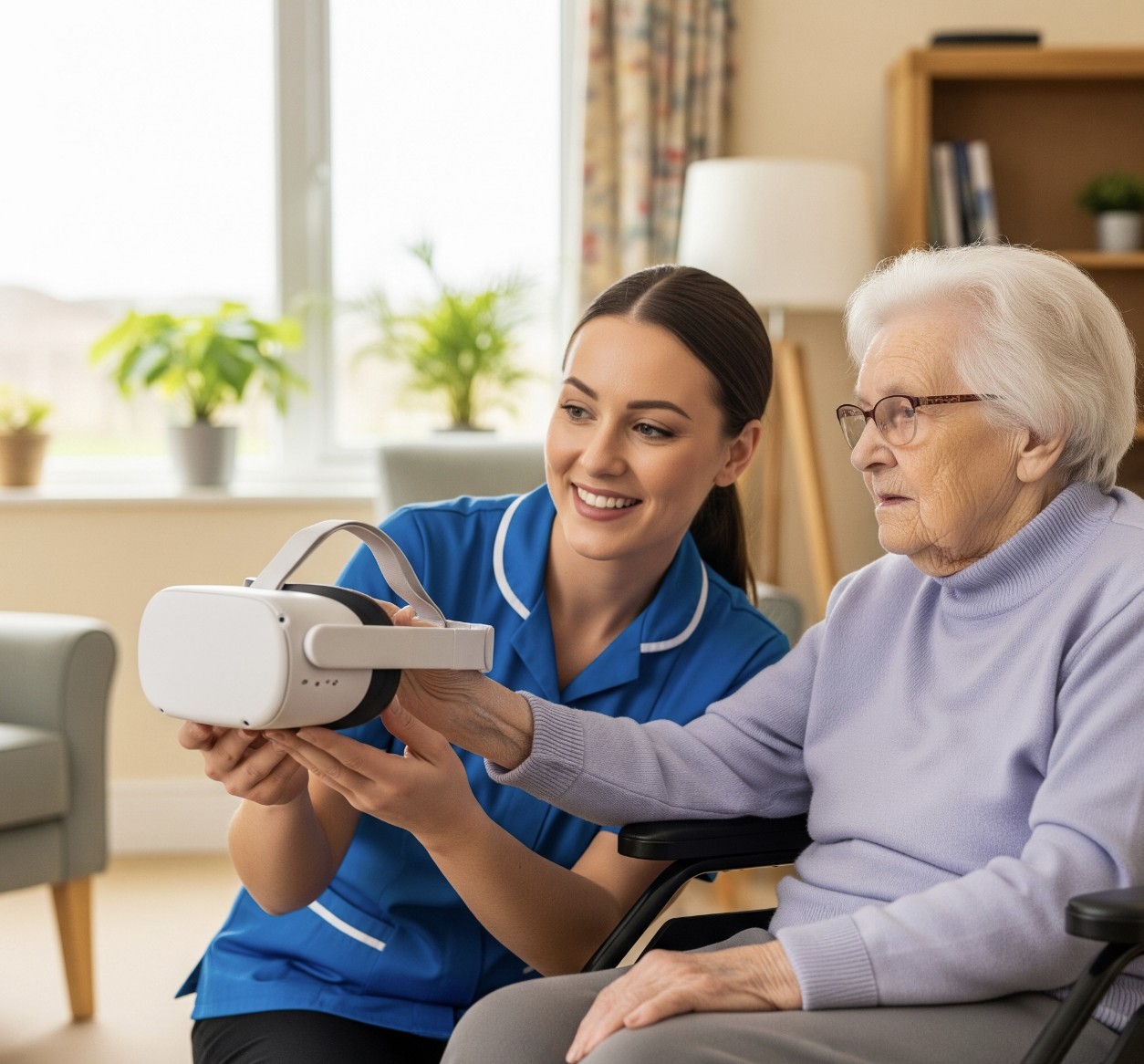
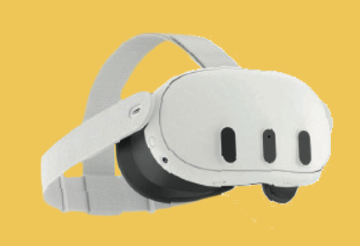
V-Thera has been developed for Meta’s Quest 3S headset - it is reliable, easy to use and is excellent value for money.
Loading V-Thera on the headset takes just a few minutes, and we provide full instructions to help you through the process of setting it up and using it. Then you are ready to go.
We have found that some residents are more willing to try than others, but as they see others use it, they want to take part themselves. This is helped by the casting function in the headset which allows you to share the user’s experience widely on a television or screen. Again, this is very simple to do.
We recommend using hygiene strips or washable visor guards to ensure hygiene is maintained as the headset is moved from user to user - you’ll find recommendations in the instructions